Shay ● ●
Night Shift
FICTION · 35 MIN READ
An ER nurse and the paramedic who keeps bringing her patients at 3am fall for each other one vending machine coffee at a time, until a snowstorm shuts down the city and leaves them nowhere to go but together.
The first time Mike Doyle brought her a patient, it was 3:12 in the morning and the patient was singing.
"Fly me to the moon," the patient sang, loud and mostly in tune, strapped to the stretcher with an ice pack taped to his forehead. "Let me play among the stars."
"Eddie," Sarah said. "It's Tuesday."
"I know what day it is, sweetheart."
"You only come in on Fridays."
"I'm branching out."
The paramedic pushing the stretcher was new. She'd have remembered him. Tall, a little rumpled, dark hair flattened on one side like he'd been sleeping against a window, and the navy uniform with the reflective strips that made every medic in the city look like a crossing guard. He had a cup of something in his free hand and a pen behind his ear, and he was trying very hard not to laugh.
"Fifty-eight-year-old male," he said, "found sitting on a fire hydrant on Ninth and Forty-Sixth, conducting traffic. Small lac above the left eye from a disagreement with a scaffolding pole. Alert, oriented to person and place, very strong opinions about time. Vitals are fine. Blood sugar's fine. He's had, by his own account, a few."
"Seven," Eddie said. "Seven is a few."
"Seven's a lot, Eddie," Sarah said.
"Not if they're small."
"They're never small."
The medic looked at her, then at Eddie, then back at her. "You two know each other."
"Eddie's been coming here longer than I have," she said. "Hall bed four. He likes hall bed four."
"I like the view," Eddie said. The view from hall bed four was the Pyxis machine and a poster about handwashing that someone had drawn a mustache on in 2019.
They moved him over on a count of three. Eddie went on singing. The medic signed the tablet she held out and gave her the run sheet, and then, instead of leaving like they always did, he stood there and held out the cup.
"You look like you need this more than me," he said.
She looked at it. "What is it."
"It's from your vending machine. B4."
"B4 is French Vanilla."
"That's what the button says."
"B4 tastes like a candle somebody's grandmother bought at a craft fair."
"Okay," he said. "So you've had it."
She had. Many times. It was three in the morning and she'd been on her feet since seven, and her last real meal had been a granola bar she'd eaten standing up over a trash can. She took the cup.
It tasted like a candle. She drank half of it.
"Mike," he said, and pointed at his own chest, at the name tape that said DOYLE. "Mike Doyle. I just transferred over to this side. I used to run out of the Bronx."
"Sarah."
"I know," he said, and nodded at her badge. Then he went pink, just at the tops of his ears, like he hadn't meant to say it out loud, and his partner yelled from the bay that they had another job, and he was gone through the sliding doors into the cold before she could say anything back.
"He's cute," Eddie said from hall bed four.
"Go to sleep, Eddie."
"I'm just saying. I've been here a long time. I've seen a lot of medics."
"Eddie."
"Fly me to the moon," Eddie sang, softer, and closed his eyes.
· · ·
Westside General sat on Tenth Avenue in the low Fifties, a brick building from the 1920s with a glass addition from the 1990s stuck on the side like a bad haircut. The emergency department was on the ground floor of the glass part. The ambulance bay opened onto Fifty-Second Street, a short ramp with a yellow curb and a sign that said NO STANDING AMBULANCE ONLY that every cab in Hell's Kitchen read as a suggestion.
Sarah had worked nights there for four years. She'd started on days, out of school, and switched after eight months because the money was better and because, if she was being honest, she liked it. Nights were a different hospital. The administrators went home. The overhead lights in the hallways dimmed to half. The people who came in at two in the morning were either very sick or very drunk or very alone, and sometimes all three, and there was a kind of loose, tired kindness among the staff that she'd never found anywhere else.
The cost was everything else. She was thirty-one and she slept from nine in the morning until four in the afternoon in a fifth-floor walkup on West Forty-Ninth Street with blackout curtains and a white noise machine set to a sound called Rain on Tent. She ate dinner at six in the evening and called it breakfast. Her friends had brunch without her. Her sister Megan, who lived in Hoboken with a husband and a baby and a Peloton, texted her things like "are you alive" and "call me when you're up," which meant 4pm, which was when the baby napped, which meant they never talked.
She'd dated, a little. A lawyer who wanted to see her on Saturday nights, which she worked. A bartender, which was promising for a while, because his hours were almost hers, until it turned out his hours were also a lot of other women's hours. After that she'd mostly stopped. It was easier to come home at eight in the morning to nobody, eat cereal in the gray light, and go to bed.
She did not think about the medic with the pink ears. She thought about him a regular, normal amount, which was occasionally, when the vending machine was in view.
· · ·
He came back on Thursday with a woman in labor who was very calm about it, and her husband, who was not.
"Is this the right floor," the husband kept saying. "Is this the right floor. Mike, is this the right floor."
"This is the right building," Mike said. "Labor and delivery is upstairs. They're gonna take you up. Breathe, Kevin."
"I'm breathing."
"You're breathing like a guy blowing up a pool float."
The woman, who was the one actually having the baby, caught Sarah's eye over her husband's shoulder and rolled hers so hard it was almost a medical event. Sarah liked her immediately.
After transport took them upstairs, Mike lingered by the nurses' station. He had two cups this time.
"B4," he said.
"Why do you keep buying it."
"It's the only thing that machine has that's hot. Everything else is Funyuns."
"There's a C2. C2 is regular coffee."
"C2 has been out since I started coming here."
She thought about it. "That's true. C2's been out since August."
"So it's B4 or nothing," he said, and handed it to her. "I didn't make the rules."
She took it. Their fingers touched on the cup, just barely, and she felt it in a way that annoyed her. She was a grown woman. She'd had a man's actual heart in her hands during a thoracotomy once, as a student. She was not going to get weird about knuckles.
"So you just transferred," she said.
"Yeah. My partner Luis and me. They're short on this side." He leaned on the counter. "Bronx was busy. This is busy too, but it's a different busy. Up there it was a lot of asthma, a lot of falls. Down here it's tourists who walked into a bus."
"That's Midtown."
"I picked up a guy last week who fell off one of those pedicabs outside the Disney store. He wanted to know if I could get him back in time for Aladdin."
"Could you?"
"He made the second act. I'm very proud of him."
She laughed. It came out louder than she meant, and Denise, the charge nurse, looked up from her screen across the station and raised one eyebrow at her, slowly, the way only a fifty-four-year-old woman from Staten Island who had seen everything could raise an eyebrow.
"I should go," Mike said.
"You should," Denise said, without looking up.
He went. Sarah drank the candle coffee and pretended to chart.
"No," Denise said.
"I didn't say anything."
"Medics are trouble. I married one. Twenty-two years. He snores like a garbage disposal and he can't sit in a restaurant unless he's facing the door."
"I'm not marrying him, Denise. He bought me a coffee."
"That's how it starts," Denise said. "Coffee. Then you're facing the door."
· · ·
It became a thing without anybody deciding it would be a thing.
He'd come in two or three times a shift, sometimes more, depending on how the city was behaving. Chest pains. Falls. Overdoses. A tourist from Ohio who'd tried to eat a whole bag of halal cart hot sauce on a dare. A man who'd been bitten by a stranger's Pomeranian on the High Line and wanted, very badly, for someone to arrest the Pomeranian. Each time, after the handoff, if she had a minute and he had a minute, there'd be a cup. B4. Always B4.
She learned things in the gaps. He was thirty-three. He'd grown up in Yonkers, the youngest of four, three older sisters who'd dressed him up as a bride for most of the 1990s. He'd done two years at Westchester Community College and dropped out to become an EMT because his dad had a heart attack at the kitchen table when Mike was nineteen and Mike was the only one home, and he'd done everything right and it hadn't been enough, and afterwards he'd wanted to know more. His dad had lived, for six more years. Mike said that part fast, like he was walking past it.
He lived in Woodside, Queens, above a Filipino bakery, and his whole apartment smelled like ube.
In return she told him things she usually didn't. That she'd wanted to be a vet until she found out how much you had to put dogs down. That she was from Scranton and still called every sub a hoagie. That she'd been the kind of kid who read the medical encyclopedia for fun and diagnosed her whole family with things they didn't have. That nights had felt like a secret, when she started. Like a second city that only some people were allowed in.
"It is," he said. "It's exactly that."
They were standing in the ambulance bay at the time, at about 5:40 in the morning. His rig was parked on the ramp with its back doors open, and Luis was inside restocking and humming something by Bad Bunny. It was October and the air had just started to bite. Out at the end of Fifty-Second Street, past Ninth, past Eighth, way down between the buildings, the sky was doing the thing it did. A pale strip of yellow coming up from somewhere over the East River, so narrow it looked like a crack under a door.
"There it goes," he said.
She'd seen it a thousand times. From the ambulance bay. From the break room window, which faced a wall but had a sliver of sky at the top. From her own fire escape, coming home. She'd stopped noticing it years ago the way you stop noticing your own front door.
She noticed it now. The light came up the street slow and hit the windows of the parking garage across the way, and turned them gold one floor at a time.
"Everybody else is just waking up," she said.
"Yeah."
"Their alarm's going off. They're making coffee. They're mad about it."
"And we're going to bed," he said. "Like vampires."
"Vampires with student loans."
"Vampires with really bad coffee," he said, and held up his cup, and she knocked hers against it.
Luis stuck his head out of the back of the rig. "Doyle. We got a job. Sixty-Fifth and West End, unconscious, unknown."
"Coming." Mike drained his cup and tossed it in the bin and walked backwards toward the rig, looking at her. "Same time tomorrow?"
"I'm off tomorrow."
"Thursday, then."
"You don't know you'll get sent here Thursday."
"I'll get sent here," he said, and climbed in, and the doors shut, and the rig went down the ramp with its lights coming on, red and white across the gold windows of the garage.
She stood there until the light reached the street.
· · ·
The hard night was the second Saturday in November.
It started bad and got worse. A bus crash on the West Side Highway at eleven, nobody dead but six people with broken things. Then a fire in a building on Fiftieth that sent them four people full of smoke and one firefighter with a burned hand who kept apologizing for taking up a bed. Then the usual Saturday, on top of all of it. The drunk, the high, the sad. A girl from NYU who'd taken something at a party in a warehouse and thought her arms were made of bees.
By two in the morning every bed was full and every hall bed was full and there were people on chairs in the hallway with IVs taped to their arms. Sarah hadn't sat down since eight. She'd peed once. She'd eaten six peanut butter crackers out of a patient's untouched tray, which she was going to feel bad about later.
At 2:47 the radio went.
"Westside, Medic Fourteen-Bravo, we're coming to you with a twenty-six-year-old female, cardiac arrest, witnessed, on the downtown platform at Fiftieth Street. CPR in progress. We had a shockable rhythm, shocked times three, we've got ROSC as of two minutes ago. ETA four minutes."
It was Mike's voice. She'd know it anywhere by then. Calm, a little flat, the way medics talked on the radio, like they were ordering a sandwich.
"Copy, Fourteen-Bravo," Denise said into the handset. "Trauma one." She hung up and looked at Sarah. "You're on it."
They got the room ready. Dr. Cole, the attending, came out of a curtain pulling on gloves. Sarah set up the monitor and hung saline and laid out the things she'd need and the things she hoped she wouldn't, and checked the defibrillator pads twice, and then the doors at the end of the hall slid open and the cold came in, and the stretcher.
Mike was kneeling on the stretcher. Actually on it, one knee next to the patient's hip, both hands locked on her chest, doing compressions while Luis pushed. The patient was young. Dark hair in a ponytail, a puffer coat cut open down the middle, one sneaker on. Somebody's earbuds were still tangled in her hair.
"Lost her again in the elevator," Mike said. His voice was steady but his face was gray. "Two minutes ago. Back in V-fib. Shocked once more in the rig."
"Okay," Dr. Cole said. "Okay. On my count, we move her."
They moved her. Sarah took over compressions and Mike stepped back, breathing hard, and somebody handed him a towel he didn't use.
A code was loud and quiet at the same time. Two minutes and check, two minutes and check, and in between you pushed and counted out loud and didn't think about the one sneaker. You thought about the next two minutes. That was all you were allowed.
Sarah pushed. Then a resident pushed. Then Sarah again. Dr. Cole called for epi, and for amiodarone, and for a shock, and everybody stood clear, and the body did what bodies do when you put electricity through them, and then everybody looked at the monitor.
A line. Then a bump. Then another bump.
"I've got a pulse," Sarah said, two fingers in the groove of the girl's neck. "I've got a pulse. Strong. I've got a pulse."
Nobody cheered. You don't. But the whole room breathed out at once, eight people, and she felt it like a door had opened somewhere.
Her name was Brianna. She was a pastry chef. She'd been going home after a shift at a restaurant on Thirty-Eighth Street, and she'd sat down on the bench on the platform, and her heart had just stopped. No warning. There was probably something wrong with it she'd been born with. They'd find out later, upstairs, in the cath lab and the ICU and all the places that came after the ER, the places Sarah almost never got to see.
They sent her up at 3:40. Sarah watched the elevator doors close on her and went back out into the hall and kept working, because the hall was still full.
· · ·
She didn't see Mike again until 5:15.
Brianna was alive. Sarah had called up to the ICU on a break, which you weren't supposed to do, and the nurse up there, a guy she knew from nursing school, had said, "She's here. She's stable. She squeezed my hand."
The one after was the problem.
At 4:20 Medic Fourteen-Bravo had brought in a nineteen-year-old delivery cyclist who'd been hit by a box truck making a right turn onto Tenth Avenue. She'd seen him come in. She hadn't been on his room. She'd heard enough through the curtain to know how it was going, and she'd heard it stop going, at 4:51, when Dr. Cole said the time out loud in the quiet voice he used only for that.
His name was Danny. He had a phone in his pocket that kept buzzing. Somebody was going to have to answer it.
She found Mike in the ambulance bay. He was sitting on the back bumper of the rig with his elbows on his knees and his hands hanging down between them, and he wasn't doing anything. Luis was inside the rig, cleaning, very quietly, the way you clean when you're giving someone room. He looked at Sarah over Mike's head and gave her a small nod and went back to wiping down the bench.
She didn't say anything. She sat down next to him on the bumper. It was cold, the metal, through her scrubs. The sky at the end of the street was still black.
After a while he said, "He had his helmet on."
"Yeah."
"He had his helmet on and his lights on. He was doing everything right."
"I know."
"The truck driver was crying so hard I had to have the cops sit with him. He kept saying he didn't see him. He kept saying it over and over, like if he said it enough times it would mean something." Mike rubbed his face with both hands. "I'm sorry. You don't need this. You've been on all night."
"So have you."
"Yeah, but you got the girl back."
"You got the girl back," Sarah said. "You were on her chest for, what. Twenty minutes? In a subway station? In an elevator? That was you."
He didn't answer. He was looking at his hands. They were shaking a little, she noticed, the way hands do after adrenaline, after hours of it, when the body finally figures out it can stop.
She took one of them. She didn't think about it first. She just did it. She put her hand around his, and held it on her knee, and they sat there like that on the bumper of an ambulance on Fifty-Second Street, with the exhaust from a garbage truck drifting past, and neither of them said anything for a long time.
His hand was cold and rough and very big. After a minute it stopped shaking.
At the end of the street the sky went from black to blue, and from blue to gray, and then to that thin yellow strip under the door.
"There it goes," he said, quiet.
"There it goes."
· · ·
Neither of them wanted to go home. That was the thing about a night like that. You couldn't just get on the subway and go to bed. Your body was still running. Your brain was still counting to thirty.
"Are you hungry," he said, when they were both off, at 7:40, standing on the sidewalk outside the hospital in their coats. He was in a hoodie and a beat-up canvas jacket now, not the uniform, and he looked younger. Tireder, too. "I know a place."
"Is it the Comet?"
"How'd you know?"
"It's always the Comet," she said. "Everybody on nights goes to the Comet."
The Comet was on Ninth Avenue and Forty-Sixth, a diner with a neon sign where the E had been out since the Bloomberg administration, so it said COM T. It was open twenty-four hours, and at four in the morning it was cops and cab drivers and drag queens coming off shows and nurses and medics and guys who worked the overnight shift at the Port Authority. At eight in the morning it was all of those people plus tourists who'd read about it in a guidebook, which the night people resented in a silent, collective way.
They got a booth in the back. The vinyl was red and patched with red duct tape that didn't quite match. The waitress was a woman named Rosa who had been there, as far as anyone knew, forever. She put down two coffees without asking.
"Eggs," she said to Mike. It wasn't a question.
"Eggs. Scrambled. Rye toast."
She looked at Sarah. "You. I know you. You're the pancakes."
"I'm the pancakes," Sarah said.
"Bad night," Rosa said. She was looking at both of them. "I can tell. I'll bring extra butter."
She went away. Mike looked at the coffee. "This is so much better than B4."
"Anything's better than B4."
"I've gotten attached to B4, though."
"You've got a sickness," she said, and he smiled for the first time since the bumper, a little crooked, and she felt something in her chest she'd been trying not to name for about six weeks just stand up and name itself.
They ate. They didn't talk about the night. That was another rule nobody had told her but everybody seemed to know. You didn't talk about it at the diner. You talked about anything else. So they talked about his sisters. About a woman on Arthur Avenue who'd once thrown a whole lasagna at his partner. About whether the Knicks were real this year. He thought yes. She thought he was a child.
Outside the window Ninth Avenue was waking up. Delivery guys. A woman walking three greyhounds in matching sweaters. The bodega across the street pulling its gate up with a noise like a train.
"Can I ask you something," he said.
"You just did."
"Can I ask you something else."
"Okay."
He turned his coffee cup around on the saucer. A full rotation. Then he did it again. "Would you want to go out with me? Like on a date. A real one. Not the diner. Not B4. Like somewhere with a menu that's not laminated."
She looked at him. He looked back. His ears were going pink again.
"In daylight?" she said.
"If that's what it takes."
"I don't know if I've seen daylight since the Obama administration."
"I'll bring a flashlight," he said, and she laughed, really laughed, the first time all night, and Rosa looked over from behind the counter and nodded like something had been settled.
"Yes," Sarah said. "Okay. Yes."
"Yeah?"
"Yeah."
"Okay," he said, and grinned at his eggs like an idiot, and she grinned at her pancakes like a bigger one.
They walked out at 9:15. It was bright and cold and the whole city was going to work, people in good coats with AirPods in, walking fast, holding iced coffees even though it was November. Sarah and Mike walked slow, against the current, the only two people on Ninth Avenue going to bed.
At the corner of Forty-Ninth he stopped. "This is you?"
"Halfway down the block."
"I'll text you," he said. "We'll figure out a day."
"Good luck," she said. "I mean that."
· · ·
Ok so I'm off Monday and Tuesday nights. You?
I'm on Monday and Tuesday. Off Wed Thu.
I'm on Wed Thu
Of course you are
What about Sunday day? Like 2pm?
2pm is my 3am
Ok what's your noon
My noon is 9pm
That's not a noon that's a dinner
Welcome to my life
They tried. They really did. In the three weeks after the Comet, they made three plans and kept zero of them.
The first one was a Sunday lunch at a Thai place on Ninth that she loved. She set two alarms. She slept through both. She woke up at 4:30 in the afternoon with her phone face down on her chest and six texts from him, the last one just a photo of an empty table with two glasses of Thai iced tea on it and a caption that said "They're melting."
The second one, he got held over. A pileup on the FDR, three rigs, his relief didn't show. He texted her from the back of the ambulance at 11am to say he was so sorry, he was in Kips Bay holding a guy's leg together, and she texted back that it was the best excuse she'd ever gotten, and meant it, and was still disappointed in a way that surprised her.
The third one they actually both showed up to. A matinee at the AMC on Forty-Second Street, a movie about a heist that had gotten good reviews. They bought popcorn. They sat down. The lights went down. She woke up with the credits rolling and her head on his shoulder and his head on top of hers, and a teenager two rows back saying, very loudly, to his friend, "Bro, the old couple's asleep."
"We're not old," Mike said, still half asleep, to the whole theater.
"We're thirty-one and thirty-three," Sarah said. "To him we're dead."
They laughed about it on the escalator, and on the sidewalk, and it was good. It was genuinely good. But he had to go to work at seven and she had to sleep, and they split up at the corner of Eighth Avenue like two people who'd been introduced at a party.
In between, she still saw him three times a night. More, some nights. He'd come through the doors behind a stretcher and look for her, and she'd look up, and that was the date, really. Ninety seconds by the nurses' station. A cup of B4. Ten minutes in the ambulance bay at 5:45 in the morning, if the city let them have it.
"This is the stupidest relationship I've ever been in," she told Denise, one night in early December.
"You're not in a relationship. You've never been on a date."
"That's what makes it stupid."
Denise didn't look up from her screen. "My husband and I didn't have a real date for four months. He kept getting mandated. We finally went to a Sizzler in Staten Island at eleven in the morning. I had the shrimp."
"How was it?"
"Twenty-two years," Denise said. "Snoring like a garbage disposal. You figure out the shrimp."
· · ·
The snow started on a Thursday night in the middle of January.
The forecast had said six to ten inches and then twelve to eighteen and then, around dinnertime, the mayor got on TV in a fleece vest and said the words "travel ban," and everybody in the city knew what that meant. No cars after ten. Buses pulled. Above-ground subway lines shut down by midnight. Two feet, maybe more, wind gusting to fifty, the kind of storm New York got once every few years and then talked about for a decade.
Sarah walked to work in it at 6:30. Ten blocks, head down, snow already over the tops of her boots on the side streets. The city was emptying out around her. Restaurants on Ninth closing early. A guy in front of a bar on Fifty-First with a shovel in one hand and a beer in the other, waving at her like they were old friends.
The ER was strange that night. For the first few hours it was busy in a frantic way, people trying to get seen before the storm hit, slips and falls on the ice, a man who'd had chest pain for three days and decided tonight, of all nights, was the night to have it looked at. Then, around eleven, it went almost quiet. The snow was coming down so hard you couldn't see across Tenth Avenue. Nobody was driving. Nobody was walking. Even the drunks had gone home.
At midnight Medic Fourteen-Bravo came in with a seventy-year-old woman who'd fallen shoveling her stoop on Forty-Seventh Street because, she told everyone who would listen, her landlord was a bum and she wasn't going to wait for him.
"Hip," Mike said, at the handoff. He was covered in snow. It was in his hair, on his eyebrows, melting off his jacket onto the floor in little puddles. "Probably broken. She's tough. She called me a nice boy and then she called Luis a putz."
"I am a putz," Luis said, from behind him. "She's not wrong."
After the handoff his radio squawked, and he listened to it, and his face changed.
"What," Sarah said.
"They're pulling all the non-emergency rigs off the road. Too dangerous. Anybody at a hospital stays at the hospital until it clears." He looked at her. "Looks like I'm stuck here."
"Here."
"Here," he said. "With you. And the putz."
"For how long?"
"No idea."
She tried very hard not to look like a woman who'd just been told something good.
It was the longest night of her life and the fastest. The storm got worse. The windows of the waiting room went fully white. At three in the morning the power flickered and the generators kicked in with a deep rumble she could feel in her feet, and half the lights in the hallway stayed off, and everything glowed a little orange from the emergency lighting, like the whole department was lit by a fireplace.
Mike and Luis made themselves useful. They moved stretchers. They helped transport take patients upstairs, because half of the night transport staff couldn't get in. Mike sat with the woman with the broken hip for an hour while she waited for ortho, and let her tell him about her landlord, and her late husband, and her landlord's mother, who was apparently also a bum.
At four, Sarah found ten minutes. She went to the vending machine.
He was already there. Two cups.
"C2 is back," he said, holding one up like a trophy.
"No."
"Real coffee. I think the storm did it. I think it's a miracle."
She took it. She drank it. It was terrible. It was much worse than B4. It tasted like hot water somebody had shown a picture of coffee.
"Oh, no," she said.
"I know."
"It's so bad."
"I know. I'm devastated. I've been waiting months." He looked into his cup with real grief. "Want to split a B4?"
They split a B4, standing by the vending machine in the orange half-dark, passing the cup back and forth, and it was the best coffee she'd ever had, which she was never going to tell him.
· · ·
The day shift couldn't get in.
At 7am, when they were supposed to be relieved, the phone at the nurses' station started ringing with people calling to say they were stuck. The trains were down. The streets weren't plowed. A nurse from Astoria tried to walk across the Queensboro Bridge and got turned around by the cops. So the night shift stayed. Sarah stayed until noon. Denise stayed until two, and only left because Dr. Cole physically took her badge and put it in his pocket.
By then the snow had stopped. A few day people had made it in on foot, looking like arctic explorers, and the department was holding steady, and somebody told Sarah to go home before she fell over.
Mike was waiting by the doors. He'd been released an hour earlier, but he couldn't get back to Queens. No trains past Queensboro Plaza. No buses. No cabs.
"I was going to sleep in the rig," he said. "Luis is in there already. He's snoring."
"You can't sleep in the rig."
"I've slept in worse."
"Mike." She zipped up her coat. Her heart was going hard and stupid in her chest, like she was nineteen and not thirty-one and a professional who'd been awake for thirty hours. "I live ten blocks away."
He looked at her for a long second.
"Okay," he said.
They walked out into it.
She'd lived in New York for nine years. She'd never seen it like this. Tenth Avenue was a white field. No cars, no lines, no curbs, just smooth snow up to her knees, with one narrow trench down the middle where a plow had gone through once and given up. The sky had cleared and it was so bright it hurt. The sun was out, low and white, bouncing off every surface, every window, every buried car. And it was quiet. That was the thing she'd remember. Manhattan, at one in the afternoon on a Friday, quiet enough that she could hear the snow sliding off a fire escape half a block away.
There were people out, a few. A family with a sled on Fifty-First Street, pulling a toddler in a snowsuit so big he looked like a starfish. Two guys having a snowball fight in front of a closed laundromat. A man on cross-country skis going down the middle of Ninth Avenue, slowly, very serious about it, like he'd been waiting his whole life.
"This is insane," Mike said.
"I know."
"Is that guy skiing?"
"He's skiing."
"In Hell's Kitchen."
"I think he lives here," she said. "I think he's been ready for this for years."
Somewhere around Fiftieth Street, he took her hand. Just like that, through two pairs of gloves. She didn't say anything about it and neither did he.
The building on Forty-Ninth had a drift up to the second step. They kicked through it. She got the door open with her shoulder and they stood in the tiny vestibule with the mailboxes, stamping snow off their boots, breathing hard, faces red and stinging, and she looked at him and he looked at her, and nobody said anything.
"Fifth floor," she said finally. "No elevator. I'm sorry."
"I carry people up stairs for a living."
"You're not carrying me."
"I wasn't going to," he said. "I was just saying. I could."
· · ·
Her apartment was small and warm and smelled like the radiator, which clanked when they came in like it had been waiting. The blackout curtains were still drawn from yesterday, and the room was dark except for a thin bright line of snow-light where the curtains didn't quite meet. She didn't turn the lamp on.
They took their coats off. Their boots. She hung his wet jacket over the radiator, and it hissed, and they both laughed at the noise, a little too loud, and then stopped laughing.
He was standing in the middle of her kitchen in his socks. He looked enormous in there. He looked like he was trying to take up less room.
"You can sit," she said.
"I'm okay."
"You've been up for thirty hours."
"So have you."
"I'm not standing in the middle of your kitchen."
"Sarah," he said, and the way he said it made her stop talking.
He stepped toward her. Slowly. Like he was giving her every chance in the world to step back. She didn't. She stood there with her back against her own counter, her hair still wet from the snow, and let him come.
He put one hand on the side of her face. His palm was warm now. His thumb moved once along her cheekbone, very lightly, like he was checking that she was real.
"I've wanted to do this since the guy on the hydrant," he said.
"Eddie."
"Since Eddie."
"That's very romantic."
"I know," he said. "I'm a very romantic guy."
Then he kissed her.
It was slow at first. Careful. Then it wasn't. She had her hands in his shirt, twisted in the fabric at his back, pulling him in, and he made a low sound against her mouth that went straight through her, and lifted her up onto the counter like she weighed nothing. A mug went over somewhere and neither of them looked. His mouth moved to her jaw, to her neck, to the place under her ear that she hadn't known about until right then, and she said his name in a voice she didn't recognize.
She'd been tired for four years. She'd been tired in the bones, in a way sleep didn't fix. She wasn't tired now. Every part of her was awake. The snow-light on the wall. The clank of the radiator. The rough scratch of his jaw, where he hadn't shaved since yesterday. The heat of his hands through the thin cotton of her scrub top, and then not through it.
"Is this okay," he said, very low, against her collarbone.
"Yes."
"You're sure."
"Mike," she said. "I have been sure since B4."
He laughed into her skin, and she felt it all the way down.
Her bedroom was six feet away. It took them a long time to get there. They left a trail. Her fleece, his hoodie, a sock she found three days later under the radiator. At the bedroom door he stopped, and pressed his forehead to hers, and they stood there breathing, his hands on her bare waist, her hands flat on his chest where his heart was going as hard as hers.
"Hi," he said.
"Hi."
Outside, the whole city was buried and still. Inside, the white noise machine was still on from the morning before, playing Rain on Tent to nobody, and she reached past him in the dark and switched it off, so that the only sound left was the two of them.
She pulled him down onto the bed, and the line of light from the window fell across them both, and after that, for a long time, she didn't think about anything at all.
· · ·
The email came three weeks later, on a Tuesday, at 4:12 in the afternoon, while she was still in bed with her phone an inch from her face.
She'd forgotten she'd applied. That was the embarrassing part. She'd put in for the transfer last April, in a bad week, after a stretch where she'd slept four hours a day and missed Megan's baby shower and cried in the shower over a commercial for paper towels. Days. Seven to seven. Weekends off every other week. The kind of schedule where you could make plans with people and then actually go.
The position was hers if she wanted it. Start date the first Monday in March. Please confirm by Friday.
She read it four times. Then she put the phone face down on the blanket and lay there in the dark.
Mike was on nights. Mike had always been on nights. He'd told her once, at the Comet, that he'd tried days for a year in the Bronx and hated it, all the traffic, all the supervisors, all the people awake and watching. Nights were where he made sense.
If she took it, she'd be getting up when he was getting off. She'd be going to bed when he was getting up. They'd been barely managing it on the same schedule. On opposite ones, they'd be two people who texted each other good morning and good night at the same time.
She didn't tell him. She meant to. She saw him that night, and the next, and the one after, and every time she opened her mouth something else came out. A joke about Eddie. A question about his sister's wedding. He'd been coming over after shifts, when they lined up, and falling asleep in her bed with one arm thrown over her like a seatbelt, and she'd lie there in the dark with Rain on Tent going and think, tell him, and not tell him.
On Thursday Denise said, "Did you tell HR yet?"
"Denise."
"They called me for a reference. What did you want me to say. That you're bad?"
"I haven't decided."
"Well, you'd better decide fast," Denise said, "because I told Luis, and Luis has a mouth like a fire hydrant."
· · ·
He found her in the ambulance bay at 5:50 Friday morning. She could tell from the way he walked up that he knew.
"Days," he said.
"I was going to tell you."
"When?"
"Today. Honestly. I swear. I just." She pulled her coat tighter. The air was cold and wet, the snow on the curb gone gray and hard as concrete. "I applied in April. Before you. Before Eddie. I forgot I even did it."
"Are you going to take it?"
"I don't know."
"Sarah."
"I don't know, Mike." It came out sharper than she meant. "I don't know what I'm supposed to do. I've been on nights for four years. I'm tired. I'm tired all the time. I want to see my sister. I want to go to brunch like a regular idiot. And then there's you, and you're on nights, and I'm finally, I finally have this one thing, and if I take it, I lose the only time I ever get to see you."
She hadn't meant to say all of that. It just came out, in the cold, in front of the ambulance.
He was quiet for a second.
"Okay," he said. "Can I say something?"
"Okay."
"Take it."
She looked at him.
"Take it," he said again. "You're exhausted. I can see it. I've been watching you be exhausted since October. You fall asleep at the movies. You fell asleep in the middle of a sentence on Sunday. You were talking about your sister and you just stopped and you were out." He almost smiled. "It was cute. It was also a little alarming, medically."
"But you."
"I'm not going anywhere."
"You'll be asleep when I'm awake."
"Not all the time."
"Most of the time."
"Then we'll work it out," he said. "We'll figure out the shrimp."
She stared at him. "Did Denise tell you about the Sizzler?"
"Denise tells everybody about the Sizzler," he said. "Sarah. Listen. You think I've been coming here at three in the morning because I like the coffee?"
"You said you'd gotten attached to B4."
"I lied about B4," he said. "B4 is terrible. I'd drink it every day for the rest of my life."
She started laughing and then she was crying a little, and then he had his arms around her, and she had her face in his jacket, which smelled like cold and diesel and a little like ube, and at the end of the street, past Ninth and past Eighth and way down between the buildings, the sky did the thing it did.
· · ·
She took the job.
The card came the week before she started. It was taped to the wall by the nurses' station, where people put the ones they wanted everybody to see. On the front, a drawing of a cupcake. Inside, in round careful handwriting.
To the people in Trauma 1 and the medics from 14-Bravo. My name is Brianna. You don't know me but I know you. I'm home. I'm going back to work in April. I'm making you all a cake. Thank you for my life.
Mike stood in front of it for a long time. Sarah stood next to him. Luis came up behind them and read it and said, "Okay, I'm gonna go restock," in a weird voice, and went to stand in the ambulance bay by himself for ten minutes.
"Hey," Sarah said, very quietly, and took Mike's hand.
He held on.
· · ·
Her first day shift was a Monday in March.
She got up at 5:30. In the dark. Like a person. She made coffee in her own kitchen, real coffee, and drank it at her own counter, and walked down Ninth Avenue at 6:15 in the morning in a stream of other people walking to work, in good coats, with AirPods in. She didn't belong to them yet. She felt like a spy.
The sky was just starting. Blue going gray.
She came around the corner onto Fifty-Second Street and stopped.
Medic Fourteen-Bravo was parked on the ramp in the ambulance bay with its back doors open. Luis was inside, restocking, humming Bad Bunny. And Mike was sitting on the back bumper in his uniform, at the end of his night, with his elbows on his knees and two cups of coffee next to him on the steel.
He stood up when he saw her.
"Morning," he said.
"It's night for you."
"It's both," he said, and handed her a cup.
She looked at it. "B4?"
"B4."
"You're sick."
"I've got something to tell you," he said. "I put in for days. In Manhattan. They had an opening on a day tour starting May. Luis is coming too, because he said he can't trust anybody else to hold the cardiac monitor right."
"I can't," Luis called from inside. "It's true. I've seen them."
"You hate days," Sarah said.
"I hated days in the Bronx," Mike said. "I didn't have anybody to have them with."
She didn't say anything. She couldn't. She just stood there in her clean new scrubs, holding the candle coffee, with the cold coming off the concrete.
"And until May," he said, "we've got this. Seven a.m. You're coming in, I'm going out. Every morning. We'll meet right here."
"In the ambulance bay."
"In the ambulance bay."
"That's the stupidest relationship I've ever heard of," she said.
"I know," he said. "It's great, right?"
At the end of the street, past Ninth and past Eighth and way down between the buildings, the light came up. A thin yellow strip at first. Then wider. It hit the windows of the parking garage across the way and turned them gold one floor at a time, and kept coming, down the brick, down the street, over the buried gray snow on the curb, until it reached the bumper of the ambulance and the two of them standing there.
Everybody else in the city was just waking up. Their alarms were going off. They were making coffee. They were mad about it.
Sarah wasn't mad about anything.
"There it goes," he said.
She leaned into him, his arm around her shoulders, his jacket cold under her cheek, and drank the terrible coffee, and watched it come.
"There it goes," she said.
— Shay ●●
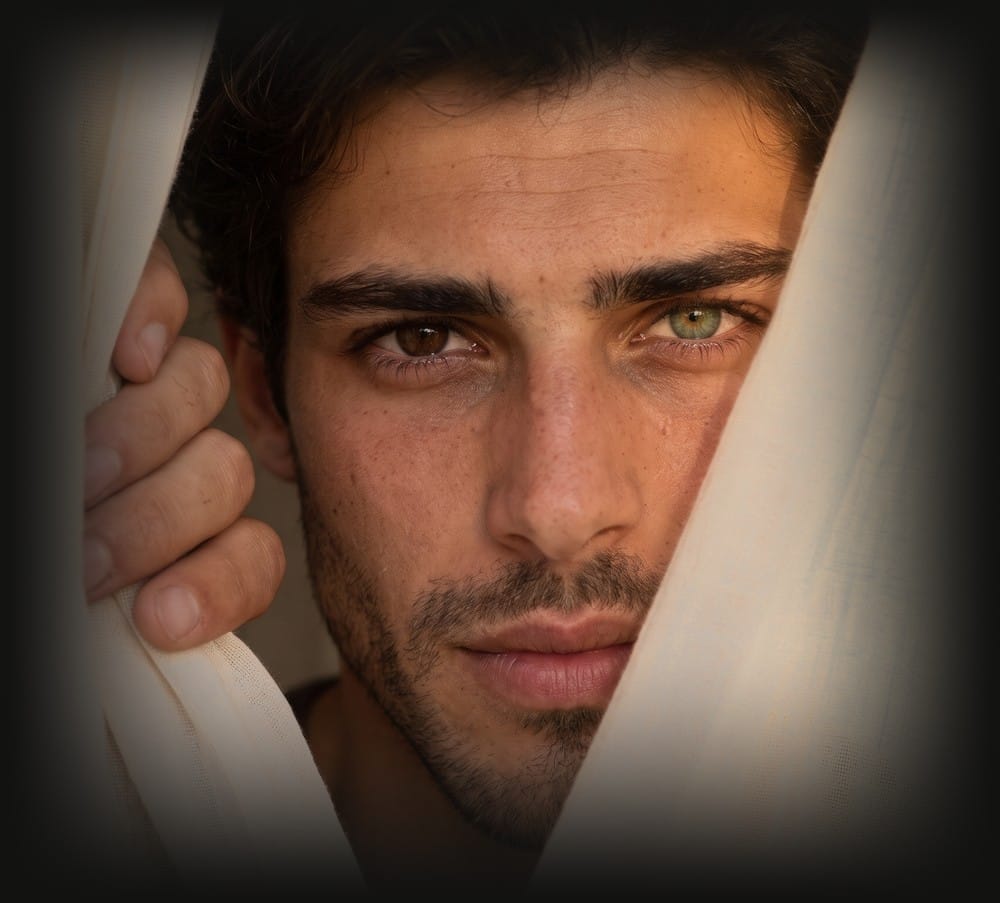
THE AUTHOR
Hi, I'm Shay.
I live in a loft in Brooklyn with a puppy called Moro. Most nights I can't sleep, so I write. Some of it is my week. Some of it is fiction.